 (713) 965-7200
 Phishing and Email Scams: How to Protect Client Confidentiality


Client confidentiality is the backbone of the legal profession. It used to be that all a law firm needed was a locked, secure cabinet and a restricted office area and client information was safe. Now, the same information is stored in the digital space in little devices.
This digital space has given attorneys the flexibility they need to access client files on the go. Yet, the American Bar Association noted that 77% of attorneys do not have adequate safety measures needed to secure client data. The figure is significantly concerning, considering that security researchers found worrying security issues in the computer chips of digital devices produced by major manufacturers like Microsoft, Apple, and Amazon.
The State Bar of Texas reported a settlement incident that almost resulted in the loss of $10 million. The incident started with a fake email address that closely resembled the original email of the recipient. It was then that the scammers knew about a confidential eight-figure settlement.
You can lose even more than this if you don’t take the necessary steps to protect your clients’ confidentiality. But first, let’s find out what phishing and email scams are all about.
What Is Phishing?
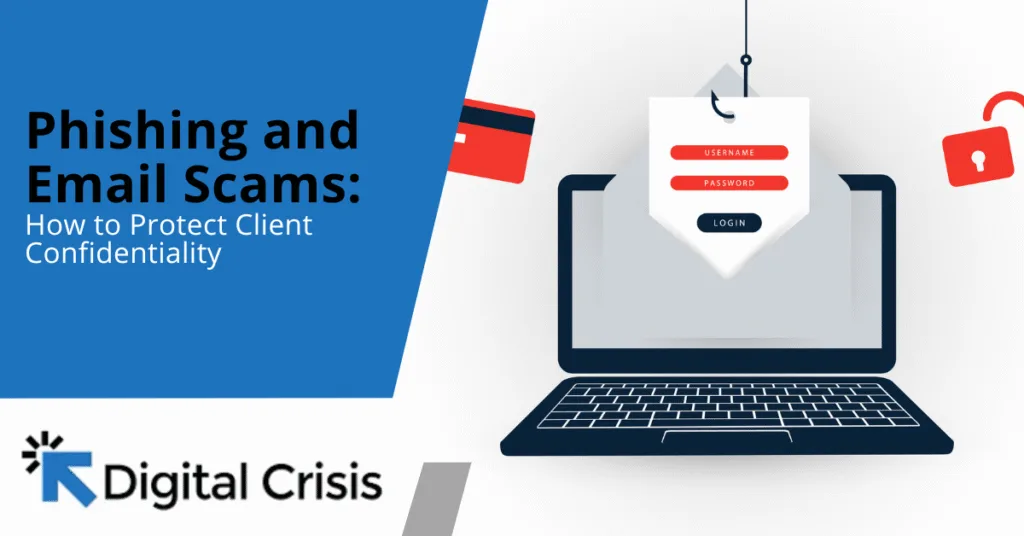
According to the FBI, phishing is a scheme that uses spoofing techniques to trick an individual into giving out confidential information that the sender shouldn’t have access to. Phishing starts with an email that looks very much like it is from a legitimate business. The details of the email will ask you to update or verify your personal information by clicking on the link provided.
Clicking on that link is a big mistake. If the site takes you to your credit card site, you will likely enter your credit card number, password, PIN, and security question answers. Those details will then be in the hands of those behind the phishing scheme.
What Are Email Scams?
Email scams are no better. A scammer will send an ‘urgent’ email, which is disguised to look like it is from the government, a legit business, or law enforcement. The email address will bear the same logo as that of the real organization. These scammers will do everything to make the email look real. Interacting with a fake email makes you vulnerable, as you will end up sending confidential information to the scammer.
How to Stay Safe From Phishing and Email Scams
As a law firm, you must take proactive measures to safeguard your client’s confidential information. Here is how to stay safe.
Use Secure Communication Channels
At any given time, your attorneys and clients will communicate. Such communications could involve the exchange of sensitive information. If the exchange is not private and secure, there is a high chance that the information is unsafe. Every exchange between the firm and the client should be safe and secure, and it starts with using email services that provide end-to-end encryption.
An email that uses end-to-end encryption is safe and secure because only the sender and the recipient can read the contents of the email. Third parties, hackers, and cybercriminals cannot access such emails, which is a guarantee that information shared with the client is safe and secure.
Prioritize Encrypted Data Storage Solutions
Your law office must store your clients’ information, and that information makes you a target. One way to protect sensitive information is to use encrypted storage solutions, which prevents unauthorized access from third parties.
Encrypted storage solutions are designed to convert data into a coded form, and it becomes only accessible to authorized individuals who have the decryption key. Encrypted data solutions offer more guarantee as a data storage solution. In the event that your data is intercepted or stolen, the attacker has no way of decrypting the stolen information because the data remains encrypted from the source to the destination.
Leverage the Benefits of Cybersecurity Tools
The unending threats to cyberspace are the reason for the proliferation of cybersecurity tools, almost in equal measure. Cybersecurity software is needed to keep out the cyber attackers who are sending email scams, phishing, and malware.
AI technologies, such as Webroot, use machine learning and behavioral analysis to detect and block cyber threats in real time.
Be Updated on the Evolution of Security Threats
Cyber criminals are not about to throw in the towel and stop trying to access your clients’ confidential information. When you put in place powerful software to lock them out of your messages and data, they are bound to come up with new tactics to breach your security systems.
Staying one step ahead of these cybercriminals is critical to the safety of your systems. You can decide to update your security systems every six months or at least determine that the software you are using is still effective.
As a law firm, you should have someone designated to stay informed. Conferences, connections with cybersecurity experts, and security forums on the internet are good sources for the latest security threats. You can share knowledge with others and find out about the best practices used by other legal firms.
Have Clear Policies and Procedures
Having encryption and cybersecurity software is one way to keep your client data safe. Still, there is evidence that some security breaches are inside jobs. Do you have explicit guidelines on how your staff should handle client information? Are there protocols they should follow?
Policies and procedures define how everyone at the firm handles client data. These policies should start with the need for strong passwords and a protocol to follow when sharing client information. The same policies should limit access to sensitive information as well. With these policies and procedures in place, you can easily identify vulnerabilities and address them before your firm is in jeopardy.
Who Is Your Trusted Cybersecurity Expert?
Your cybersecurity expert can mean the difference between the safety of your clients’ information and its loss. A trusted cybersecurity expert like Digital Crisis will secure your communication channels, encrypt your storage solutions, and educate your staff on the threats lurking in cyberspace.